Monday, April 2, 2018

What to Know about Death and Dying

When one considers a discussion one death and dying, it is not always an enjoyable conversation but in class that expectation was defied and we were given a wonderful and interesting insight into that world. Today in class we had the pleasure of listening to a lecture from sociology professor Dr. George E. Dickinson on Death and Dying. Many different topics can be considered when one discusses death and he covered many of them including society's idea on dying, death anxiety/fear, and even the different stages of the dying process. He also included other things such as the rising Death Cafe's in Western culture and present opinions on euthanasia in the United States.

Something that he discussed that really interested me on was his discussion on the different historical overviews throughout the years. It was really fascinating how death was thought of in different ages going from an age where you were to be reminded of death constantly and into the present moment where we are reminded of death but do not want to discuss it. During the time between 1830-1945 death was not really discussed. As the professor said, "Out of sight out of mind" was the sort of perspective that people had during that time which is one of the reasons why cemeteries were beginning to be built farther away from cities and were given a new mission when people came there to visit. "People visited the cemeteries to admire the beauty and enjoy life" as the professor stated and I feel that that can also be evident in present times.

Something else that really interested me was how our society denies death due to fear or anxiety. It do not want to consider death because it makes us uncomfortable as he stated. "We don't die in American, we just go to sleep." This perspective is common in this country and we often use euphemisms in order to avoid the harshness that "death" would have. 

Overall his lecture was very interesting and not at all heavy and perhaps dark that would often be suggested when one considers death and dying. He mentioned many interesting facts and stories that pertained to the subject that I really enjoyed listening to. I definitely learned a lot from him and maybe even hope to take his class in the future. 


Friday, March 23, 2018

Knight of the Ancestors

Sir Richard Houghton was born in 1569 on the estate of Hoghton Tower in Lancashire, England. He was the eldest son to Sir William Houghton and therefore was given the estate once his father had died. Sir Richard Houghton is accounted for many different things throughout his extravagant life. To name a few, I will be discussing some of his life at Hoghton Tower, his relationship with the king, and his downfall into bankruptcy.

Sir Richard Houghton 
His life at the estate was average yet extravagant depending on one's perspective. To the common people of the day, his life was exciting and grandiose but to someone who is in the same class as him, it would seem ordinary. He became friends with the king during his life and even invited him over for dinner in hopes that he would be redeemed for his growing debt with his alum mines.

As it is said, he put down half a mile of red carpet on the road leading to his estate in preparation for King James I who was to be staying there for three days. He invited many close friends to stay and had exciting entertainment ranging from theatre to hunting. The food was also another thing to mention. One fun story was that one night during a feast, the king was so impressed by a meat being served he withdrew his sword and knighted the meat "Sir Loin Steak", thus sirloin steak. The event was said to be a glorious time and gave him the chance to try and appeal to the king.

Unfortunately, though, his luck did not last long and he was imprisoned after his debt was no longer tolerated or avoided. He was given bail multiple times and was finally released before his death in 1630. I was unable to find what exactly he died of but he was buried on the Houghton Tower estate. I got a lot of my information from my late grandfather and online with ancestry.com as well as some the links provided.

Hoghton Tower, Lancashire, England

Hoghton Tower, Lancashire, England


Monday, March 12, 2018

The Mystery of Elizabeth Hutchinson Jackson

Charleston is no stranger to mysteries due to its riveting and full history that has been taking place since the 17th century. One can imagine that there is an emphasis on burial grounds during this time which is one of the many things that Charleston is known for. Many famous historical people are buried in the Holy City including the mother of a United States president, Elizabeth Hutchinson Jackson. Jackson supposedly died due to an illness while she was helping her nephews and others who were on a British prisoner ship. The mystery that surrounds her is the issue that no one has any idea where she was buried, even today. Her son, Andrew Jackson, tried multiple times to find the final resting place of his mother to no avail.

So the question is, why is the tombstone of Jackson on the College of Charleston campus? Well, during the 1970's former CofC president decided it would be a good idea to move the tombstone onto the campus after it was found to be mistreated and the campus has been it's home ever since. Although her body has never been able to been found, at least her tombstone is well taken care of and walked past by hundreds of people each day. To find the tombstone, simply go to Cougar Mall and in between the Honors College House and the RSS Building, the tombstone rests. Another way that she is commemorated is by a memorial statue in the Old Waxhaw Presbyterian Cemetery.

Elizabeth Hutchinson Jackson
Tombstone
Elizabeth Hutchinson Jackson
Memorial
strangehistory.com

Sunday, February 25, 2018

Behind the Stone Picture

Bethel United Methodist Church is truly one of Charleston's treasures and we had the pleasure of being shown her diverse graveyard as well as take a tour inside the historic walls. During our tour, we were given a lot of valuable and interesting information regarding the church's history as well as a lot of the meanings behind the symbols on the tombstones.

Sue Bennet
Sue Bennet is a Charleston historian as well as a tour guide and member of the Bethel United Methodist Church. She gave us many interesting facts some of which are, 
"There are more than 100 graveyards in Charleston" 
"A large earthquake knocked over a lot of our tombstones" 
and also expressed that Bethel had their own African American burial ground on the premises of the church which was very rare for it's time. 


Cradle Grave Marker
This first tombstone is the grave sight of Reverend Fleming, one of the many ministers here. The symbol on it is a wreath which symbolizes the victory in death. This grave is called a cradle. 

Die on Socket Grave Marker
The name of this person is Rosa Mary and the symbol of the cloth draped over the grave marker symbolizes mourning. This is called a Die on Socket.

Headstone Grave Marker
The name here is Priscilla Bason. The cross inside the crown symbolizes a victory and triumph over death and also represents Christianity. This is called a headstone.

Headstone Grave Marker and my shoes wanting some spotlight
The woman here was named Mary Elizabeth and the symbol of the roses represents beauty. The gravestone is called a headstone, though it has fallen over time. 

Ledger Grave Marker
The lady here was named Elizabeth Furchess. This gravestone is called a ledger and the willow represents sadness or mourning. 

Headstone Grave Marker
The woman here was named Elizabeth Mainger and she died in 1872 and the gravestone is called a headstone. The dove represents love and peace. 

Ledger Grave Marker
The woman here is named Elizabeth M. and the tombstone is called a ledger. The angel symbolizes a guide to heaven. 

Headstone Grave Marker
I am unable to make out the name on this marker but it is called an headstone and the hourglass represents passage of time. 

Headstone Grave Marker
The name was unable to be deciphered but the urn symbolizes the soul. This is called a headstone. 

Headstone Grave Marker
The name here is Casey Poyas and the finger pointing up represents the hope of heaven. This is called a headstone. 


Here are a is picture that I collected from inside the church. Beautiful, is it not?

Interior of Bethel UMC

Friday, February 16, 2018

The Wonderful Words of Ruth Miller

This past class we had the wonderful privilege getting to listen to Ruth Miller who is a Charleston Historian. She has written two books named "A Short History of Charleston" and "The Old Dog" and she also has her own website which you may find here!

Ruth Miller was been a tour guide for forty years and it was during one of her tours that she became interested in the grave sights of Charleston. She began to research and learn a lot of the history that went into this important graveyards and cemeteries.

During her time with us, she covered a lot of the history of how Charleston came to be and had an emphasis on the many graveyards and churches here. "We have religious to thank for our churches" stated Miller. If it were not for Charleston's religious freedom, the city would be nothing like it is now. “We have the most 18th century graveyards in North America” she states which is due to the religious freedom.

I learned a lot of new things about Charleston and it was really interesting to learn more about my favorite city. On of the most shocking themes that we discussed was how common it is for burial grounds to be discovered even now. It was not unusual for people to be buried in unmarked graves, especially if they were a minority. Also one must consider that over time many of the burial sites were vandalized and the grave markers were probably destroyed. “The roads from Church street to Market street have bodies under them” states Miller. This makes you wonder how many bodies you are walking over just by trying to get to class.


Monday, February 5, 2018

Interesting Library Findings

Today, we had the pleasure of listening to Mr. Jared Seay introduce and teach us a few things about the library. Here are a few facts that I gathered from our time with him:

1) Ability to narrow results down while using the library online
2) Ability to look up articles/books/pdfs/etc. the library contains
3) Academic Search Complete is known as the "Google of all databases"
4) Has over 120 databases
5) E-Journals lets you know if the library has the journal you are looking for

https://library.cofc.edu 


Saturday, February 3, 2018

First Grave Yard Excursion


  This post displays some of the findings I found in one of our late night graveyard excursions.
                 
   This marker was found at the Church of St. Luke and St. Paul. This grave marker is what
    you would call a Pedestal Tomb with an Urn or symbol at the    top. I was not able to find out much about the person who
     is buried here due to the low quality picture.                   

  This second maker was found in the Cathedral Church of St. Luke and St. Paul. This grave marker is
   what you would call a Cradle grave marker from its unique design being similar to that of a child's cradle. I was not able to get much information from this grave sight due to the low quality of the picture as well as the dates and name being faded overtime.


This third marker was found in the Cathedral Church of St. Luke and St. Paul. This grave maker is 
called a Box Tomb. I was not able to get much information about this grave due
to the dates and names being worn down overtime.


This fourth marker was found in the Cathedral Church of St. Luke and St. Paul. This grave marker is called a Die on Socket. The name of the person buried here is Allyson Jordon Key. She was born in 1975 and died in 2013. Not much information was given on her death.


This fifth marker was found in the Cathedral Church of St. Luke and St. Paul. This marker is called a Ledger. I was not able to collect much information about the person who was buried here due to the ledger not being in the most pristine state which is no doubt due to how long it must have been there.

This sixth marker was found in the Cathedral Church of St. Luke and St. Paul. This is called a mausoleum
and usually holds several members of the family inside the marble walls. The
    residents of this grave sight is a mystery even to the church. no information regarding 
the family has ever been found.


This seventh marker was found in the Cathedral Church of St. Luke and St. Paul.
This is called a cross grave maker. I was not able to gather much information 
about the person due to the low quality of the picture.

This eighth marker was found in the Cathedral Church of St. Luke and St. Paul. 
This is called a Slant marker and is more common today. The person here was named 
Edward Charles and was born in 1910 and died in 1974. The details about 
his death were not give.


This ninth maker was found at the Cathedral Church of St. Luke and
     St. Paul. This is called a Obelisk marker. Not much information was

     able to be found due to the low quality of the picture.


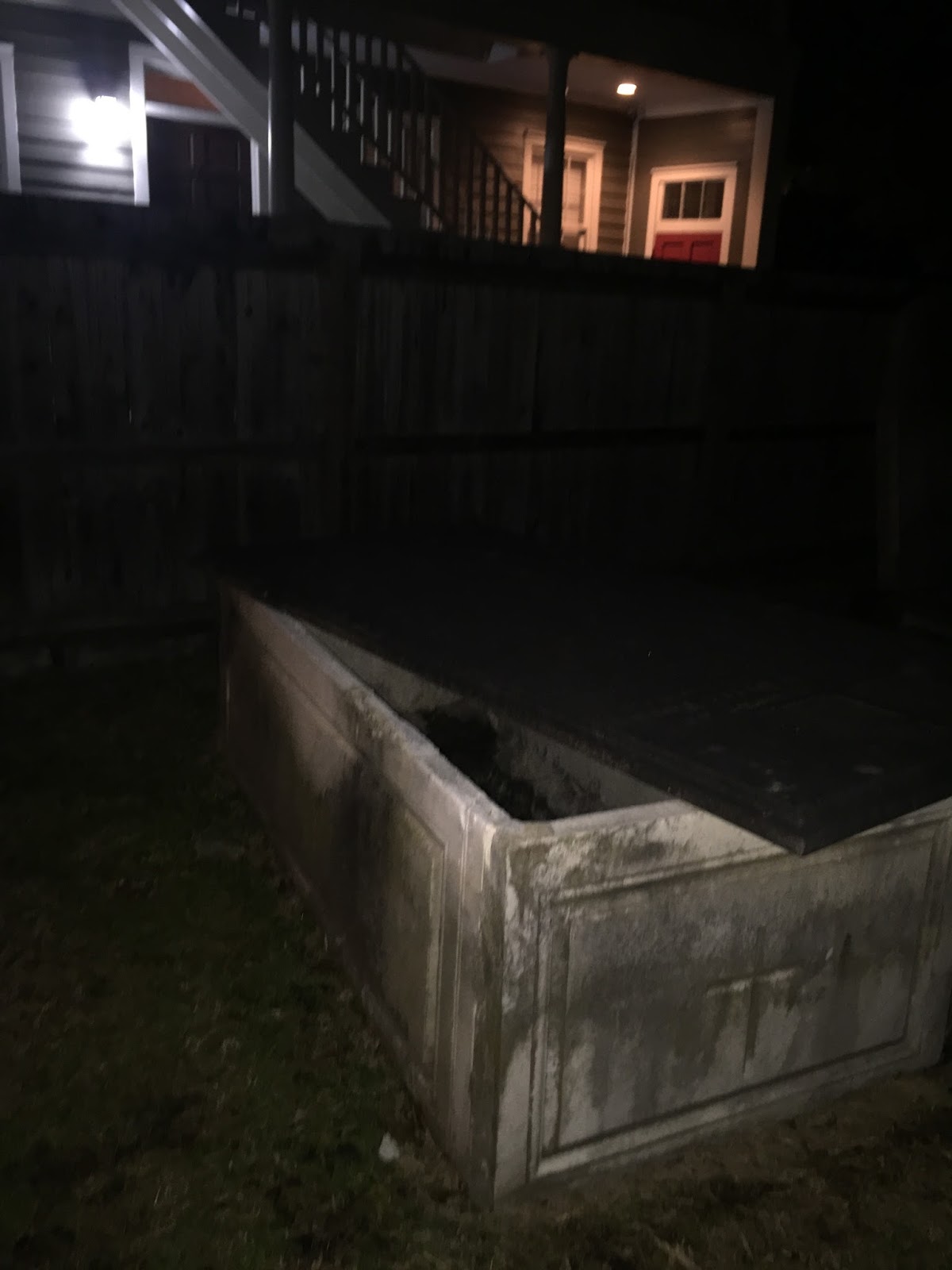
This tenth and final marker was found at the St. Patrick Catholic Church. This maker is 

called a sarcophagus and this one is especially unique because the lid was open. 
I was not able to gather any personal details of the resident.